MICROCAR
The collaboration with Patriarca Automobili Spa continues for the production of some four-wheel vehicle models in the L7 category with the design of the chassis and bodies.
In the case of four-wheel minicars (L7) the aim has always been to provide an urban vehicle of small dimensions but with the technical characteristics of M1 category vehicles, offering comfort and handling performance obtained thanks to the independent McPherson type suspension.
Work done : executive and construction design, production.
from THE TECHNIQUE OF NODES IN COMPOSITE MATERIAL
SOLIDEStudio
is based
in Rome near Ciampino Airport
SOLIDEStudio
P.IVA - VAT IT12051241003
Head Office
Via Venezia, 29/D
00043 Ciampino (Rome) - ITALY
office@solidestudio.com
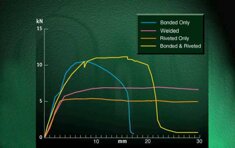
The bonding-riveting combination helps joints not to lose their rigidity due to lack of maintenance and therefore deterioration of the adhesive.
From a structural analysis point of view, the rigidity of the structure as a whole can be considered only if there are welds, threaded pins or rivets connecting the various elements, whether they are tubes or aluminum sheet panels; this is an important topic from the point of view of the structural integrity of the frame, especially in the event of an impact.
At the same time, it is not considered reliable to simplify the structural analysis in the presence of connections that are not strictly rigid or only glued.
BRIEFLY SOME ASPECT TO CONSIDER
It is certain that the technique of riveting aluminum panels that began in the 60s and 70s increases the rigidity of the frame itself but the vibrations caused over time could lead to failures to the point of losing part of the rigidity and so the glue, in addition to the rivet, determines the direct isolation of the vibrations between the frame and the riveted panel obtaining a better seal.
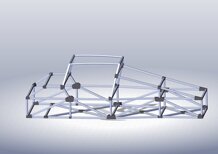
Let's keep in mind that we are talking about structures with the classic triangular arrangement of the pipes (or rods) of the chassis present under the panels or, as more recently adopted, a system of die-cast aluminium square profiles or pipes onto which the aluminium sheet is riveted.
With respect to static torsional rigidity, we know that it must follow a certain proportionality in relation to the wheelbase of the vehicle and to the mass; for example, let's consider a square tube of thickness s and side d subjected to torsion at the two ends as far apart as the wheelbase of the vehicle l, we have: kt / m = (G ● d²) / (4 ● ρ ● l²) where kt is the torsional rigidity of the tube; m is the mass of the tube; G is the modulus of elasticity of the material; ρ is the density of the material; as the wheelbase varies, the rigidity of the structure increases with the square of the wheelbase and is proportional to the mass.
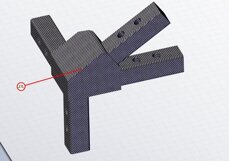
3D Printed nylon-carbon node - SOLIDE Studio design

These so-called panels will form boxed elements or subframes suitable for safety in the event of a frontal impact, absorbing the kinetic energy by deforming and consequently slowing down the vehicle; these boxes may also be supported by composite material elements to better absorb the kinetic energy in a possible impact, to better clarify this last aspect :
E = (m ● V²) / 2 [J] Energy to be absorbed; mc = E / Es [kg] Mass of collapsible structure required to absorb the energy E of the vehicle. Es is the specific energy absorbed per unit of absorbing mass.
A development of this technique is being studied with tests and stress analyses of both the nodes and the chassis as a whole. These results will be useful for better understanding the feasibility and use of a chassis of this type and on which category or class of vehicle it could be adopted.
Lotus Cars Australia Pty Ltd - Lotus Engineering
SOME EXAMPLES FROM THE AUTOMOTIVE INDUSTRY
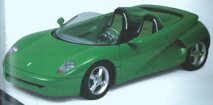
Pininfarina Ethos - 1993. Aluminum chassis made with hydroforming (stamping of aluminum sheets made through the pressure of a high-pressure hydraulic liquid at room temperature and used in particular for parts with articulated shapes). This chassis offers passive safety qualities and torsional rigidity with approximately 25% less weight than the same steel chassis.
The chassis structure can be adapted to both the barchetta and the coupé versions; the Ethos 2 is the 1998 barchetta version for urban and suburban routes and also for the American market, in particular for California where the problem of emissions were more felt than in other states.
Particular attention was paid to aerodynamic studies between 1987 and 1990 in cooperation with the CNR (National Research Council), obtaining Cd (drag coefficient) values equal to 0.19.
The aluminum chassis made with bonded and riveted aluminum tubes and profiles, at the time there was talk of a 37% reduction in fuel consumption considering that this model had an 800cc 2-stroke twin-cylinder internal combustion engine with 55 HP of power and a torque of 75 Nm at 5500 rpm.
Sheet metal fold subframe and composite chassis - SOLIDE Studio design
THE BONDED TECHNIQUE OF CHASSIS
This technique used today can be supported or not by a mechanical bonding system represented by screws or rivets; several tests carried out by manufacturers have demonstrated that this technique has similar if not superior rigidity characteristics to conventional techniques.
From a practical point of view, it is necessary to pay close attention to cleaning the surfaces on which the adhesive will be deposited; these surfaces may contain organic and inorganic impurities due essentially to the processing of the aluminium itself, reducing the cohesive force between the elements.
In this type of welding the assembled parts do not undergo any type of thermal or mechanical stress making the joint resistant from a static and dynamic point of view to the benefit of the handling of the vehicle as a whole; furthermore the adhesive also has insulating properties with respect to vibrations as well as water, humidity and galvanic corrosion, the latter caused by the contact of two different metals and in the presence of a conductive liquid such as water.
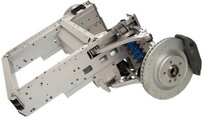
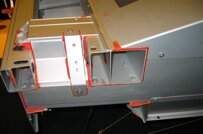
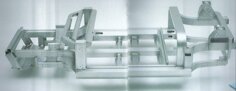
Lotus Evora front subframe - Lotus Eng.
Lotus Elise chassis - Lotus Engineering
Pininfarina Ethos aluminum chassis
SEAT Formula – 1999. Aluminium chassis made with extruded and bonded elements to obtain greater rigidity with less weight.
THE TECHNIQUE OF NODES IN COMPOSITE MATERIAL (2) - SYSTEM ADOPTED FOR THE DESIGN OF URBAN eVEHICLE EVO1 CHASSIS
This project is still in the development phase, primarily due to the research for the best performing node material, including greater structural stiffness.
For now, we are not providing data relating to the applied loads, also because the goal, as mentioned previously, is to advance the development of the chassis as much as possible and explore other configurations.
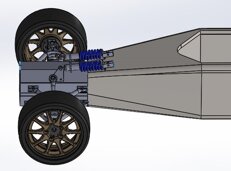
From a structural standpoint, the chassis also includes riveted aluminum panels, furthermore, the prototype chassis will be equipped with folded sheet metal panels suitable for housing the suspension mounts, which in this chassis configuration are independent double wishbones.
Materials used for printing nodes
The main characteristic of these polymer materials is anisotropy, although tests with Ny-Fc filaments for additive printing have yielded positive results.
Fused Deposition Modeling (FDM) printing technology allows us to understand the characteristics of the finished object, but not during the design phase. By assuming the isotropy and mechanical properties of the material used, we cannot be certain that these will be maintained when deposited.
What the literature says about it
Polymers, including nylon, require low melting or softening temperatures due to their structure, making them useful for FDM printing. Among the properties of polymers is the degree of adhesion between layers, which, if poor, leads to ANISOTROPY in the morphology or composition of the printed object.
The arrangement of the filaments and therefore of the material after printing is characterized by a lack of homogeneity in the structure, essentially caused by poor adhesion between the filaments themselves this leads to poor mechanical strength in the direction perpendicular to the filaments and anisotropic behavior.
A material is isotropic if it has identical mechanical and thermal properties in all directions. Isotropic materials can have a homogeneous or heterogeneous microscopic structure. For example, steel exhibits isotropic behavior even though its microscopic structure is heterogeneous.
Solutions
Unfortunately, we don't believe the anisotropic problem can be completely solved without using certain precautions during the printing phase and determining reliable mechanical properties such as the fiber's x- and y-axis elastic modulus (E1-E2), shear modulus (G1-G2), and Poisson's ratio (ν1-ν2).
Future Objectives
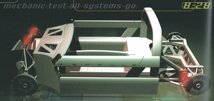

SEAT Formula chassis
LOTUS Project LEVA – 2021. The trend at Lotus is also to develop chassis suitable for electric propulsion by designing aluminum chassis as part of the research program called LEVA (Light Electric Vehicle Architecture).